Dissociative Identity Disorder, formerly known as Multiple Personality Disorder, is a very rare condition. There are only less than 200,000 cases per year in the United States. The National Alliance on Mental Illness (NAMI) states, “almost half the adults in the United States experience at least one depersonalization/derealization episode in their lives”. Only 2% of these cases met the criteria to be considered a chronic episode. Women are more likely to eperience this than men.
Dissociative Identity Disorder is very commonly confused with Bipolar Disorder. While both have to do with personality, they are completely different. With Dissociative Identity Disorder people have episodes of 2 or more distinct personality states that are a “complete disconnection between someone’s thoughts, identity, consciousness and memory”. (NAMI)
Symptoms of Dissociative Identity Disorder are
- Significant memory loss of specific times, people and events
- Out of body experiences (feeling as if you are watching a movie of yourself)
- Feelings of depression, anxiety and thoughts of suicide
- A sense of detachment from your emotions, or emotional numbness
- A lack of a sense of self-identity
(NAMI)
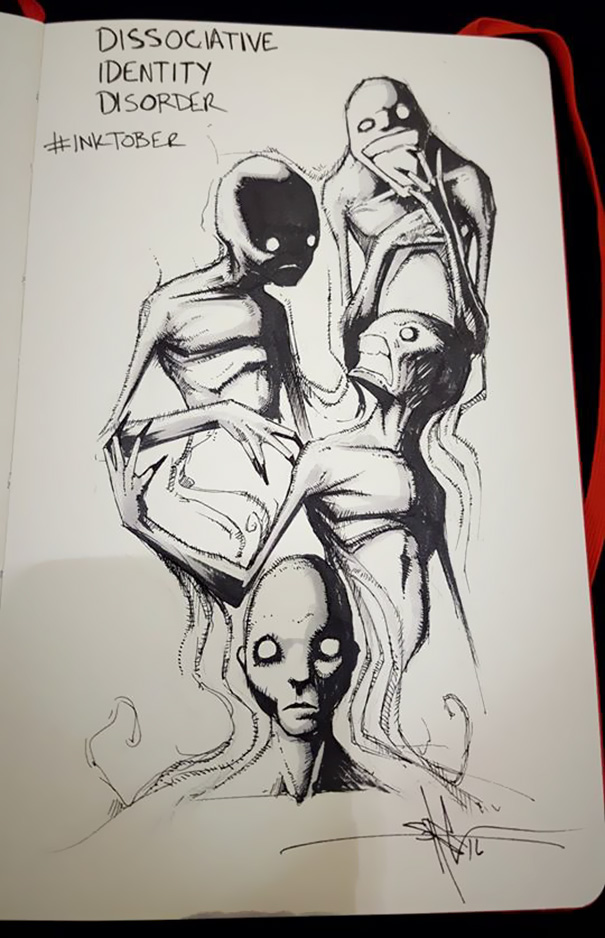
There are three different types of Dissociative Identity Disorder. The symptoms are shown differently in each of the different types. The first type is Dissociative Amnesia. The symptom that is most present in this disorder is the person loses memory of important details about themselves including their names and where they live. This can be caused by traumatic events such as abuse or even learning something about their family history.
The second type of Dissociative Identity Disorder is Depersonalization Disorder. This disorder has to do with the emotional side of things. The person will often feel detached from their actions, feelings, and thoughts. It usually feels as if they are watching themselves in a movie which is the sensation of depersonalization. These symptoms can happen in a few moments or they can become a continuous thing over the years of a person’s life. The “average onset age is 16” (NAMI), but some people can start feeling the symptoms even in early childhood. Only 20% of people first begin showing symptoms after the age of 20.
The third disorder is full blown Dissociative Identity Disorder which is when someone experiences an alternating personality change between multiple identities. They may seem to think there are voices trying to take over in their head. The identities often give themselves names, manners, and voices of their own as well. Many people with this disorder will experience small gaps of memory loss. Women are most likely to experience this as men usually deny their symptoms and react violently. This can lead to a false diagnosis.
These disorders are most usually experienced as the brain’s way to protect the person from memories of traumatic events. Some examples of the trauma that causes this are a child being long term physically, sexually, or emotionally abused. It can also be caused by experiencing a natural disaster or combat such as a war.
This disorder cannot be self-diagnosed. A doctor must diagnose because they can rule out other causes such as a head injury, brain tumor, sleep deprivation, and intoxication.
These disorders can be treated with psychotherapies, eye movement desesitization, and medication.
Source used for information: https://www.nami.org/learn-more/mental-health-conditions/dissociative-disorders
Source used for picture: https://www.boredpanda.com/for-inktober-i-focused-on-mental-illness-and-disorders/?utm_source=google&utm_medium=organic&utm_campaign=organic
 A Look Into Mental Health Issues