Bipolar Disorder is a disorder that many people misunderstand. It most commonly gets confused with Dissociative Identity Disorder (D.I.D.) which I will talk about in another post.
People with Bipolar Disorder can seem to have 2 completely different personalities. They usually have extreme mood swings that last for weeks at a time. It can cause extreme episodes of hyperness and depression. The depressive episodes can seem to be normal depression. Some common symptoms of a depressive episode with Bipolar Disorder are
- Unusually low energy
- Decreased activity levels
- Feelings of hopelessness and despair
- Loss of enjoyment in activities
- Sleeping too little or too much
- Trouble concentrating or remembering things
- Suicidal thoughts
(Todd)
There are many different symptoms of the “mania” side of Bipolar Disorder. The most common symptoms are on the complete opposite side of the spectrum. According to the NIMH in Todd’s article, these include
- Unusually high energy
- Increased activity levels
- Feeling wired or jumpy
- Feelings of elation
- Feelings of agitation or irritability
- Feelings of overconfidence
- Trouble sleeping
- Talking unusually quickly
- Trying to take on too many things at once
- Engaging in risky behavior
(Todd)
The mood swings can be both mild and severe. Hypomania is one of the more mild elevations of “manic episodes”. While they still have the symptoms of an episode, they don’t have them as extremely.
People can experience all of these symptoms at once. These are called “mixed episodes”. This can be a time when the person starts making many high-risk decisions because they are feeling hopeless from the depression, yet they still have all the extra energy from the mania.
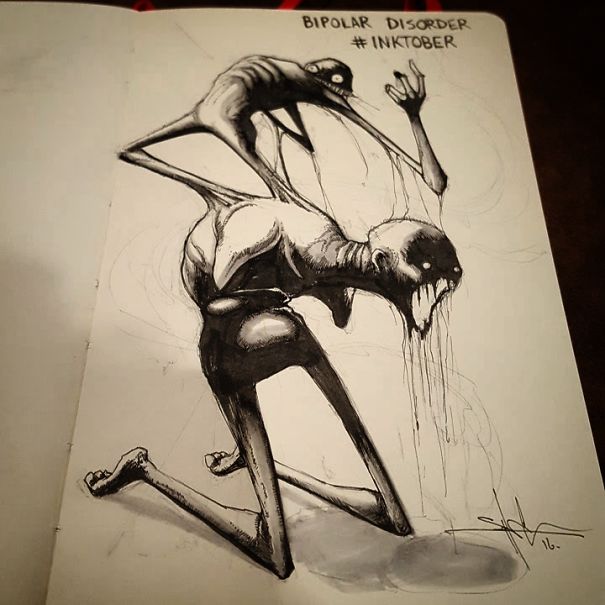
There are many different types of this disorder. People with Bipolar 1 have manic episodes that usually last about a week, sometimes more. According to NIMH, these episodes are severe enough to “warrant immediate hospitalization” (Todd). This can also include the depressive side of the symptoms that usually last around 2 or more weeks. Some people can also have the mixed episodes that include symptoms of both mania and depression.
People with Bipolar 2 have depressive episodes as well as hypomania. This is different from Bipolar 1 because the mania in Bipolar 2 is less severe.
There is also a condition called Cyclothymia. This seems like it’s Bipolar Disorder, but the symptoms are too mild to be considered as such. This has both the high energy of the mania and the hopelessness of the depression. People with this disorder have a high chance of developing Bipolar Disorder.
The NIMH says others that have these symptoms, but that aren’t severe enough to be considered any of the previously mentioned diseases are categorized under the term “Other Specified and Unspecified Bipolar and Related Disorder” (Todd).
Site used for reaserch: https://self.com/story/bipolar-disorder-facts
Site used for the picture: https://www.boredpanda.com/for-inktober-i-focused-on-mental-illness-and-disorders/?utm_source=google&utm_medium=organic&utm_campaign=organic
 A Look Into Mental Health Issues